Views: 0 Author: Site Editor Publish Time: 2026-07-20 Origin: Site


Purchasing a CNC press brake machine represents a high-stakes capital expenditure where specification misalignments directly result in production bottlenecks, scrapped parts, and diminished returns. Fabrication shops often over-invest in unnecessary axes or under-invest in tonnage and software capabilities. This leads to machines that either sit idle or fail to handle core production workflows. Evaluating the equipment in isolation without assessing the manufacturer’s post-sale infrastructure introduces severe operational risk.
This guide provides a systematic framework for evaluating specifications, comparing drive technologies, and matching shop size to the right machine class. You will learn how to vet manufacturers based on integration realities and long-term reliability. Choosing the right Press Brake Machine requires a deep understanding of your current material demands and future production goals. We will break down the exact technical requirements needed to make an informed, floor-ready decision.
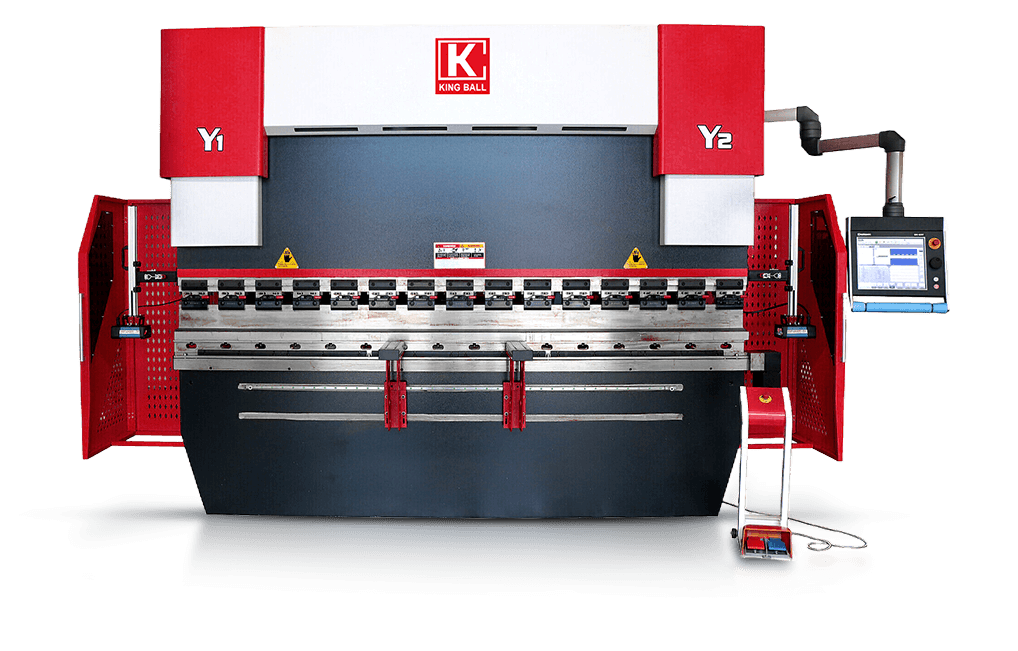
Tonnage and Length Dictate Baseline Viability: Machine capacity must be calculated using the maximum material thickness, tensile strength, and longest bend length required, factoring in a 20% to 30% safety margin.
Shop Profile Governs the Spec Level: High-mix, low-volume job shops require rapid-setup software and multi-axis backgauges, whereas high-volume production facilities require automated crowning and fast cycle-time drive systems.
Drive Systems Impact Operational Costs: The choice between hydraulic, electric, and hybrid press brake machines fundamentally alters cycle times, energy consumption, and maintenance overhead.
Ecosystem Compatibility is Crucial: A press brake machine cannot operate efficiently in a vacuum; it must synchronize with upstream processes (laser cutting, punching, shearing) and downstream assembly.
Manufacturer Support is a Critical Feature: A high-performance machine loses its value without reliable OEM service SLAs, localized spare parts availability, open CNC control architectures, and comprehensive operator training.
Table of Contents
Tonnage determines the maximum bending force the machine can apply. Calculating this requirement involves material type, sheet thickness, and the chosen V-die opening. Mild steel, stainless steel, and aluminum all possess different tensile strengths. High-strength steels exponentially increase tonnage demands compared to standard mild steel. A standard rule of thumb requires multiplying the baseline mild steel tonnage by a specific material factor. For example, bending 1/4-inch stainless steel requires significantly more force than 1/4-inch aluminum over the same die opening.
Engineers must incorporate a 20% to 30% tonnage buffer into their calculations. Operating a machine continuously at its maximum limit causes severe frame deflection and premature hydraulic wear. This safety margin prevents structural strain and accommodates future shifts toward thicker or harder materials. If your shop currently maxes out at 100 tons of required force, purchasing a 130-ton machine ensures longevity and consistent angular accuracy across long production runs.
Overall bending length differs significantly from the usable distance between the side frames. The distance between housings dictates the maximum width of a part that can pass entirely through the machine. Bending parts with deep flanges requires careful evaluation of throat depth and stroke length. Insufficient throat depth prevents long flanges from clearing the side frames during the bend, forcing operators to scrap parts or attempt dangerous workarounds.
Buying an oversized machine introduces distinct trade-offs. Larger machines often feature slower ram speeds and require a massive floor footprint. A right-sized machine optimizes cycle times and preserves valuable shop floor space while meeting your specific part dimensions. Always measure your longest anticipated part and ensure it fits comfortably between the housings if deep box bending is required.
Different manufacturing environments demand specific machine configurations. High-mix, low-volume job shops prioritize flexibility. These facilities benefit immensely from rapid-setup software, hydraulic tooling clamps, and multi-axis backgauges. Quick changeovers define profitability in these environments, as operators might switch between five different part profiles in a single shift.
Low-mix, high-volume production shops focus on throughput. These facilities require rapid cycle times, high-speed ram movement, and robotic cell integration potential. Entry-level or maintenance shops often find success with simplified single-axis or two-axis CNC systems. These basic setups handle repetitive operations without requiring extensive memory profiles or complex programming.
Shop Profile | Production Style | Priority Features | Ideal Backgauge |
|---|---|---|---|
Job Shop | High-Mix, Low-Volume | Quick clamping, offline software | 4-Axis to 6-Axis |
Production Facility | Low-Mix, High-Volume | Robotic integration, fast ram speeds | 2-Axis to 4-Axis |
Maintenance/Entry | Repair, Basic Brackets | Simple controls, durability | 1-Axis to 2-Axis |
Traditional dual-cylinder hydraulic systems dominate high-tonnage applications. These machines easily handle requirements from 100 tons up to several thousand tons. They provide raw power for bending thick plates and high-tensile materials. However, hydraulic systems introduce specific maintenance realities that shop managers must plan for.
Operators must manage oil changes, seal deterioration, and proportional valve wear. Thermal expansion presents a significant challenge during long, multi-shift runs. As hydraulic fluid heats up, its viscosity changes, which can slightly alter ram positioning accuracy. Modern hydraulic systems mitigate this with advanced cooling, but it remains a factor for ultra-precision work in non-climate-controlled shops.
Servo-electric drives utilize belt-and-pulley or ball-screw systems. These excel in low-to-medium tonnage applications, typically under 100 tons. Electric machines offer distinct operational advantages over their hydraulic counterparts. They consume energy only during the actual ram stroke, drastically reducing power usage across a standard shift.
The elimination of hydraulic fluid removes oil maintenance and leak risks entirely. Electric drives deliver faster ram acceleration and deceleration, shortening cycle times. Furthermore, they suffer from near-zero thermal drift, ensuring absolute precision from the first part of the shift to the last. This makes them ideal for intricate electronics enclosures or aerospace components.
Hybrid systems utilize bidirectional servo motors to drive localized hydraulic pumps. This architecture combines the high tonnage capabilities of traditional hydraulics with the efficiency of electric drives. The servo motor only activates the pump when movement is required, eliminating the constant hum and heat generation of a traditional hydraulic power unit.
This approach significantly reduces oil volume requirements and eliminates continuous pump idling. While hybrid systems require a higher initial investment, they deliver substantial long-term operational savings. They represent the optimal balance for shops needing heavy bending force alongside rapid, precise ram control.
Assess your maximum tonnage requirements before looking at drive types.
Evaluate your shop's electrical capacity and cooling capabilities.
Calculate the expected cycle times needed to meet production quotas.
Review the maintenance bandwidth of your current floor staff.
Backgauge complexity directly influences setup times and part accuracy. A 2-axis (X, R) backgauge suits standard, symmetrical parts and basic step bending. It controls the forward/backward and up/down movement of the gauge fingers. A 4-axis (X, R, Z1, Z2) system becomes necessary for parts with varying flange lengths. The independent Z-axes allow fingers to move left and right along the bending line.
A 6-axis (X1, X2, R1, R2, Z1, Z2) backgauge handles highly complex, asymmetrical parts. It enables tapered bends and multi-station setups across the bed length. Adding axes increases the initial investment but drastically reduces operator setup time and scrap rates on complex geometries. When operators do not have to manually slide gauge fingers, spindle uptime increases.
Modern controller software transforms a Press Brake Machine into a highly efficient workstation. 3D graphical interfaces provide on-machine collision detection, automatic tool selection, and optimal bend sequencing. Standard CNC control platforms like Delem, Cybelec, and ESA offer widespread industry familiarity. Proprietary OEM software may offer deep machine integration but can steepen the learning curve for new hires.
Offline programming software allows engineers to create bend programs away from the machine. This keeps the press brake bending metal rather than waiting for manual programming. Intuitive controls and seamless CAD/CAM integration mitigate skilled labor shortages by simplifying complex bending operations. You can simulate the entire bend sequence in the office, ensuring the part can actually be manufactured before cutting the blank.

Tooling systems dictate setup speed and operational versatility. European (Promecam) style tooling offers widespread availability and affordability. American style tooling provides robust performance for heavy-duty applications. Wila/Trumpf (WT) style tooling delivers unparalleled precision and extremely rapid tool changes through specialized clamping profiles.
Bending methods also impact machine stress. Air bending requires less tonnage and relies on the CNC to control the angle. Bottoming and coining force the material completely into the die, demanding significantly higher tonnage and increasing machine wear. High-mix environments benefit greatly from hydraulic or pneumatic quick-clamping systems, which reduce tool changeover times from minutes to seconds.
Under heavy loads, the ram and bed of the machine naturally deflect, creating a "canoe" effect. This deflection causes the bend angle in the center of the part to differ from the edges. Crowning systems compensate for this physical reality. Manual crowning utilizes wedge systems adjusted by the operator based on test bends.
CNC-controlled automatic crowning utilizes hydraulic cylinders or mechanical wedges integrated into the bed. The controller uses real-time pressure feedback to adjust the bed curve dynamically. This ensures consistent bend angles across the entire length of the machine without requiring manual shimming. For parts longer than four feet, automatic crowning is practically mandatory for consistent quality.
Machine net weight and frame construction dictate long-term alignment. Welded steel frames that undergo complete thermal stress relief maintain their geometry over decades of heavy use. Non-stress-relieved frames can warp over time, destroying positioning repeatability and causing endless frustration for operators.
A heavier frame generally indicates thicker steel plates and better vibration dampening. Rigidity directly correlates with angular accuracy. When evaluating manufacturers, scrutinize the frame engineering and the stress-relief processes utilized during fabrication. A heavy, rigid frame absorbs the immense forces generated during bottoming operations without permanent deformation.
A high-performance machine requires a robust support network. Evaluate the manufacturer's guaranteed response times and localized technician availability. Remote diagnostic capabilities via IoT allow technicians to troubleshoot software and sensor issues without a site visit, drastically reducing downtime. You need to know exactly who to call when the machine throws an error code at 2 AM.
Analyze the supply chain for replacement parts. Machines built with proprietary, single-source components introduce significant vulnerability. Equipment utilizing off-the-shelf industrial components from recognized brands ensures parts remain available globally, regardless of the OEM's future status. Standardized hydraulic valves and electrical contactors keep your maintenance team from waiting weeks for overseas shipping.
The best machine underperforms without proper operator training. Evaluate the manufacturer's onboarding process thoroughly. Determine the duration of on-site training and the quality of provided documentation. Access to ongoing technical support ensures operators can resolve complex bending challenges as they arise.
Poor training leads to low machine utilization rates. It also increases the risk of accidental tooling or backgauge collisions. Comprehensive training programs protect your investment and accelerate the transition to full production capacity. Ensure the training covers routine maintenance, not just button-pushing.
Standard warranty inclusions vary wildly between manufacturers. Scrutinize what is excluded, such as wear parts, tooling, and software subscription renewals. A comprehensive preventative maintenance contract ensures the machine receives annual calibration and fluid checks.
Regular maintenance prevents catastrophic failures and maintains angular precision. Evaluate the manufacturer's commitment to long-term lifecycle support, including software updates and control retrofits, to ensure the machine remains viable for a decade or more. A strong warranty reflects the manufacturer's confidence in their frame and drive systems.
High-tonnage machines require specific floor foundations. Standard shop floors rarely support the concentrated weight of a massive press brake. Detail the concrete depth, soil compaction, and steel reinforcement requirements with structural engineers before installation. A 300-ton machine will crack a standard four-inch slab immediately.
Installing precision equipment on inadequate foundations leads to frame twisting. Vibration propagation affects nearby machinery, and the press brake loses its positioning repeatability. Proper site preparation is non-negotiable for heavy fabrication equipment. Core drill your floor to verify thickness before signing the purchase order.
A Press Brake Machine relies heavily on complementary machinery. If upstream processes cannot cut, shear, or punch sheet metal accurately, the bending process suffers. Inconsistent blank sizes and edge defects make accurate gauging impossible. The press brake will bend exactly what you feed it; garbage in equals garbage out.
Thermal stress and micro-joints from upstream laser cutting affect how the material yields during bending. A hardened laser-cut edge may require different bending parameters than a sheared edge. Synchronization between cutting and bending tolerances ensures final assembly success. Welders downstream rely on the press brake operator to deliver perfectly angled parts to avoid excessive gap filling.
Physical shop layout dictates material flow efficiency. Analyze how material moves from storage to cutting, bending, and final welding. Bottlenecks at the press brake often stem from poor material handling rather than slow machine cycles. Staging areas must be clearly defined.
Evaluate the need for sheet followers. These front support arms assist operators with heavy or large sheets, preventing fatigue and mitigating back-bending defects. Planning for future integration of robotic bending cells requires sufficient floor space and safety perimeter considerations. Leave room around the machine for forklift access and scrap bins.
Selecting the right Press Brake Machine requires balancing production requirements, machine specifications, automation capabilities, and long-term operating costs. Evaluating tonnage, drive technology, CNC controls, tooling systems, factory readiness, and manufacturer support will help ensure your investment delivers reliable performance and sustainable productivity.
Nanjing Jinqiu CNC Machine Tool specializes in CNC sheet metal processing equipment and provides reliable press brake solutions for manufacturers worldwide. With extensive industry experience and comprehensive technical support, the company helps customers improve bending accuracy, production efficiency, and overall manufacturing performance.
Before making your final investment, consider the following:
Audit your current facility's concrete foundation and electrical supply to ensure they can support the specific tonnage and power requirements of the new equipment.
Request detailed time studies and 3D bend simulations from shortlisted manufacturers using your most complex, high-volume part files.
Verify the local availability of replacement parts and demand a clear service level agreement for technician response times.
Standardize your upstream cutting processes to ensure blank dimensions and edge conditions remain consistent before they reach the bending department.
A: Tonnage is calculated based on material thickness, tensile strength, and the V-die opening. You must multiply the baseline mild steel requirement by a material factor. Always add a 20% to 30% safety margin to prevent machine strain.
A: Hydraulic brakes use fluid and cylinders, offering massive force for heavy plates but requiring oil maintenance. Electric brakes use servo motors, providing faster speeds, lower energy usage, and higher precision for thinner materials without hydraulic fluid.
A: Crowning compensates for the natural deflection of the machine bed and ram under heavy loads. Without crowning, the center of a long bend will have a different angle than the edges. Automatic crowning ensures consistent angles across the entire part length.
A: A 2-axis system works for simple, symmetrical parts. A 4-axis system is needed for varying flange lengths. A 6-axis system is required for complex, asymmetrical parts and tapered bends, significantly reducing manual setup time.
A: Look for a heavy, welded steel frame that has been fully thermally stress-relieved. This process ensures the frame will not warp over time, maintaining critical alignment and angular repeatability for the life of the equipment.
A: No. A press brake relies on accurate blank sizes and clean edges for proper gauging. If upstream laser cutting or shearing is inconsistent, the final bent part will fail tolerance checks regardless of the press brake's precision.


