Views: 0 Author: Site Editor Publish Time: 2026-07-20 Origin: Site


Precision sheet metal fabrication relies entirely on matching the right bending technology to specific production volumes, material gauges, and tolerance requirements. Investing in the wrong Press Brake Machine leads to production bottlenecks, excessive energy consumption, high scrap rates during setup, and an inability to meet tight customer tolerances. You need an objective, technical breakdown of mechanical, hydraulic, electric, and hybrid systems to guide capital equipment procurement and ensure long-term operational ROI. We will evaluate the core mechanics, structural classifications, and ideal use cases for each technology. This ensures your facility matches the machine's capabilities directly to your daily fabrication demands, avoiding costly mismatches in tonnage, precision, or cycle speed.
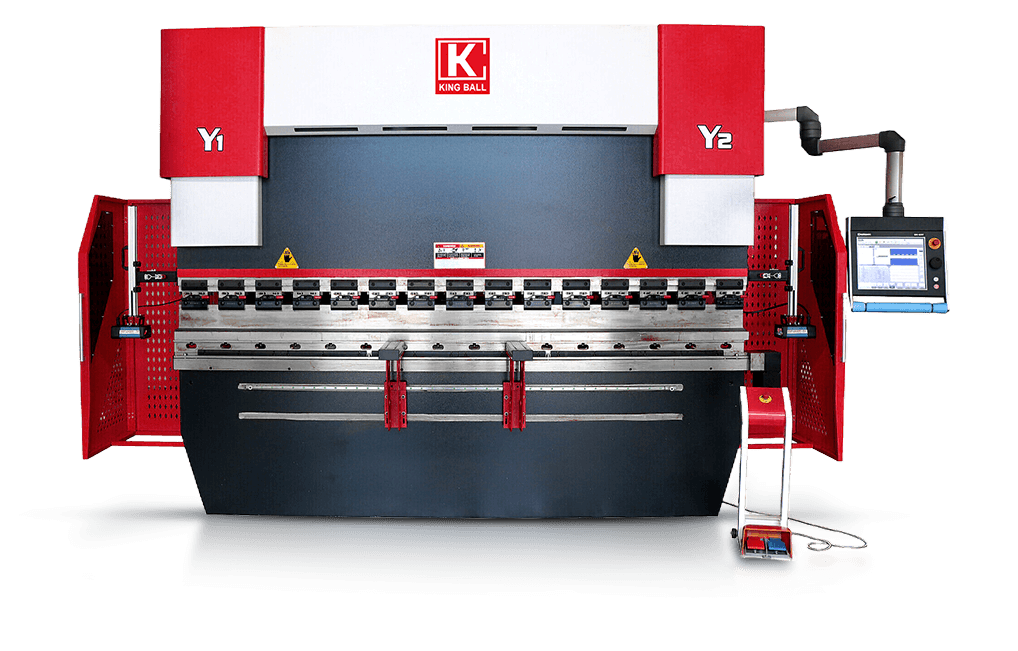
Hydraulic systems remain the industry standard for high-tonnage, heavy-plate fabrication but incur higher ongoing maintenance and continuous energy costs.
All-electric press brakes deliver superior precision, faster cycle times, and up to 50% energy savings, making them ideal for thin-to-medium gauge materials.
Hybrid models bridge the gap, utilizing servo-driven hydraulics to provide high tonnage without the thermal drift and constant energy draw of traditional hydraulic systems.
CNC integration is now a baseline requirement for high-mix/low-volume environments, drastically reducing setup times and mitigating the impact of skilled labor shortages.
Table of Contents
Establish the baseline operational requirement before selecting a Press Brake Machine. You must differentiate between high-mix/low-volume production and low-mix/high-volume production. High-mix environments require rapid tool changes, offline programming, and advanced CNC capabilities to handle constant changeovers. Low-mix environments prioritize raw speed, mechanical durability, and repeatable accuracy over long runs.
Define the primary materials processed on your floor. Focus on maximum gauge, tensile strength, and maximum bend length. These factors directly dictate the required machine tonnage. A shop bending 1/4-inch mild steel requires vastly different force than one forming 16-gauge aluminum.
Frame your accuracy requirements carefully. Aerospace or medical component fabrication demands higher positional accuracy. This often requires electric or high-end electro-hydraulic systems. Standard structural steel work can tolerate wider variances, allowing for simpler hydraulic setups.
Production Type | Key Machine Requirements | Ideal Technology |
|---|---|---|
High-Mix / Low-Volume | Fast tool changes, multi-axis CNC, offline programming | Electric or CNC Electro-Hydraulic |
Low-Mix / High-Volume | Durability, high cycle speed, automated material handling | Hybrid or Heavy-Duty Hydraulic |
The bending mechanism relies on the interaction between the moving upper ram holding the punch and the fixed lower bed holding the V-die. Different bending methods achieve different results based on how the punch interacts with the material and die.
Air Bending: The punch forces the material into the die cavity without touching the bottom of the die. This method is highly flexible and relies heavily on precise ram depth control. You can form multiple angles with the same tooling setup.
Bottoming: The sheet is pressed against the bottom of the V-die. It requires higher tonnage but offers better angle accuracy with less springback. The punch tip forces the material into the exact angle of the die.
Coining: This involves stamping the material completely into the die. Massive tonnage is required, eliminating springback entirely. It is typically used for highly repetitive legacy parts where exact precision is non-negotiable.
Standard CNC axes control the bending process. Y1 and Y2 control independent ram positioning for the left and right cylinders. X controls backgauge depth, determining the flange length. R controls backgauge height, which is necessary for complex profiles. Z1 and Z2 control horizontal gauge movement, allowing fingers to move left and right along the bending line.

Mechanical press brakes use a flywheel-driven crankshaft mechanism. This system converts rotational energy from an electric motor into the linear motion of the ram. These machines feature a fixed stroke length and a fast physical cycle speed. The flywheel stores massive kinetic energy, releasing it instantly when the clutch engages.
Historically, operators applied them in simple, high-speed, repetitive stamping and bottom bending operations. However, they carry significant drawbacks for modern fabrication. The inability to reverse the stroke mid-cycle creates a severe risk of machine lockup if overloaded. If the operator feeds material that is too thick, the ram gets stuck at the bottom dead center.
They present complex safety compliance challenges regarding OSHA standards. Guarding a mechanical flywheel system requires extensive physical barriers. Furthermore, they generally offer lower precision compared to modern alternatives. Because the stroke is fixed, you cannot adjust depth on the fly for air bending. These machines are largely being phased out in advanced fabrication facilities.
Hydraulic press brakes use synchronized hydraulic cylinders to drive the ram. This provides consistent force throughout the entire stroke, unlike mechanical systems that only reach full tonnage at the very bottom. They are categorized by structural classifications based on how the cylinders synchronize.
Classification | Synchronization Method | Best Application |
|---|---|---|
Torsion Shaft | Rigid mechanical shaft connecting cylinders | Low-cost, simple bends, center-loaded work |
Conventional NC | Mechanical stop-nuts inside cylinders | Durable, repetitive parts with basic depth control |
Electro-Hydraulic (CNC) | Independent proportional valves and linear scales | High precision, off-center bending, complex profiles |
Torsion shaft models use mechanical synchronization. They are best for lower cost but offer lower precision, are prone to mechanical wear, and lack off-center bending capabilities. Conventional NC hydraulic machines use simple directional valves. Mechanical stop-nuts inside the cylinders control depth. They offer high durability but are limited to simple parts.
Electro-hydraulic CNC models represent the modern standard. Independent, CNC-controlled proportional valves for each cylinder and optical linear scales ensure high precision. This setup allows for dynamic leveling and complex off-center bending capabilities without damaging the machine frame.
These machines are ideal for heavy plate bending, structural steel, and applications requiring massive tonnage. You will find them in shops bending thick plate up to 3000 tons. Realities include hydraulic fluid maintenance, thermal expansion affecting bending accuracy over long shifts, and continuous energy consumption while the pump is idling.
All-electric systems replace hydraulics entirely. They use servo motors driving heavy-duty ball screws, roller screws, or belt-and-pulley systems to move the ram. They are ideal for complex, high-precision parts, thin-to-medium gauge sheet metal, and environmentally conscious manufacturing environments.
Operational advantages include significant energy savings. The servo motors only draw power during actual ram movement. When the machine sits idle while the operator loads material, it consumes almost zero electricity. They offer minimal noise pollution, creating a much quieter shop floor. You also get faster ram acceleration and deceleration, which cuts down cycle times on high-volume runs. Furthermore, there is zero hydraulic fluid disposal, eliminating a major maintenance headache.
Limitations include strict tonnage caps. Electric drives typically max out around 200 to 300 tons. Pushing beyond this requires massive, impractical servo motors. They also carry a higher initial capital expenditure per ton compared to hydraulic equivalents. You pay a premium for the speed and precision.
Hybrid models integrate servo-driven hydraulic pumps. Instead of an AC motor running continuously to pump fluid, a servo motor controls the hydraulic flow. It only activates when the ram requires movement. These are ideal for facilities requiring the high tonnage of a hydraulic machine but wanting to eliminate thermal drift and reduce energy consumption.
By only running the pump when necessary, the hydraulic oil stays much cooler. This eliminates the thermal expansion that typically causes bending angles to drift during a long shift. You maintain morning precision late into the afternoon.
While the initial cost is higher than standard hydraulics, the reduction in energy usage is substantial. Extended oil life, reduced heat generation, and improved precision often justify the investment for mid-to-heavy fabricators. You get the brute force of hydraulics with the control and efficiency of an electric drive.

Basic numerical control offers simple depth and backgauge positioning. The operator manually calculates bend deductions and enters raw numbers. Full CNC systems provide multi-axis control, offline programming, and 3D step-by-step simulation. The operator sees a 3D model of the part on the screen, showing exactly how to orient the sheet for each bend.
CNC systems calculate and adjust for bed deflection automatically. When bending long parts, the machine frame naturally bows under pressure. CNC crowning uses hydraulic cylinders in the lower bed or mechanical wedge systems to push back against this deflection. This ensures consistent angles across the entire length of the bend.
CNC software calculates bend allowances, springback compensation, and crowning automatically. This drastically reduces scrap during first-article inspection. Intuitive CNC interfaces and visual bending aids mitigate the risks associated with skilled labor shortages. By lowering the barrier to entry, new operators can produce accurate parts much faster than on older manual machines.
Calculating required force involves the V-die opening, material thickness, and tensile strength. A 20% safety margin is necessary to prevent machine overloading. Never buy a machine rated exactly for your maximum required tonnage.
Critical physical dimensions dictate what parts you can physically fit into the machine.
Stroke Length: Maximum distance the ram can travel. This limits how deep of a box you can form.
Open Height: The space between the bed and ram when fully open. This dictates the maximum height of tooling and parts you can extract after bending.
Throat Depth: The clearance depth in the side frames. This determines the maximum flange length that can be bent at the extreme ends of the machine.
Evaluate tooling ecosystem compatibility. Decide between European, American, or WT style tooling based on your existing inventory. Consider the necessity of hydraulic or pneumatic quick-clamping systems for high-mix environments. Fast tool changes keep the machine bending rather than sitting idle during setup.
Address physical installation realities before taking delivery. High-tonnage machines require specific foundation load-bearing capacities. You may need to pour a reinforced concrete pad. Verify overhead clearance for rigging and crane access during installation. Ensure your facility has power supply stability to handle the electrical draw without voltage drops.
Integrated safety systems like laser-safe guarding and light curtains are necessary to protect operators. These systems stop the ram instantly if an obstruction breaks the laser beam just below the punch tip. Operators require dedicated training to transition from manual machines to advanced CNC interfaces.
Consider material handling logistics. How will you move heavy plate to and from the machine? Evaluate the potential for future robotic tending. If you plan to automate, ensure the machine has the necessary software and hardware interfaces. Verify software compatibility with your existing CAD/CAM systems to enable seamless offline programming.
Selecting the right Press Brake Machine depends on balancing tonnage requirements, bending precision, production efficiency, automation needs, and long-term operating costs. Whether you choose a hydraulic, electric, or hybrid model, matching the machine's capabilities with your production requirements is the key to maximizing productivity and return on investment.
Nanjing Jinqiu CNC Machine Tool provides professional CNC sheet metal processing equipment and customized bending solutions for manufacturers worldwide. With extensive industry experience and reliable technical support, the company helps customers improve bending accuracy, production efficiency, and long-term manufacturing performance.
Before making your final purchasing decision, consider the following:
Conduct a time-study on current bending operations to identify setup bottlenecks.
Calculate your 80th percentile tonnage requirements based on your most common material gauges.
Audit your existing tooling inventory to ensure compatibility with new clamping systems.
Request a custom test bend and cycle-time estimate from shortlisted manufacturers using your actual part files.
A: CNC systems offer multi-axis control, offline programming, and automated calculations for bend allowances and springback. They provide 3D visual simulations for the operator. NC systems rely on basic positional memory for simple depth and backgauge positioning, requiring the operator to manually calculate deductions without advanced simulation.
A: Tonnage requirements depend on the relationship between material thickness, tensile strength, bend length, and the V-die opening. Thicker materials and tighter V-dies require exponentially more force. Always include a 20% safety margin above your maximum calculated force to prevent overloading and damaging the machine frame.
A: Yes, electric press brakes generally offer faster cycle times. Servo motors provide rapid ram acceleration and deceleration compared to hydraulic pumps building pressure. This makes electric models highly efficient for high-volume, thin-to-medium gauge applications where cycle speed directly impacts production output.
A: A hybrid press brake uses servo-driven hydraulic pumps. The servo motor activates the hydraulic flow only when the ram moves. This design combines the massive tonnage capabilities of a traditional hydraulic system with the energy efficiency and reduced thermal drift of an electric drive.
A: No. Mechanical press brakes use a flywheel-driven mechanism that completes a full cycle once engaged. They cannot reverse mid-stroke. This creates a severe risk of machine lockup if the equipment is overloaded with material that is too thick or hard.
A: When bending long parts, the machine frame naturally deflects or bows under the immense pressure. Crowning compensation uses hydraulic cylinders or mechanical wedges in the lower bed to push back against this deflection. This ensures the bending angle remains perfectly consistent across the entire length of the part.


