Views: 0 Author: Site Editor Publish Time: 2025-11-17 Origin: Site


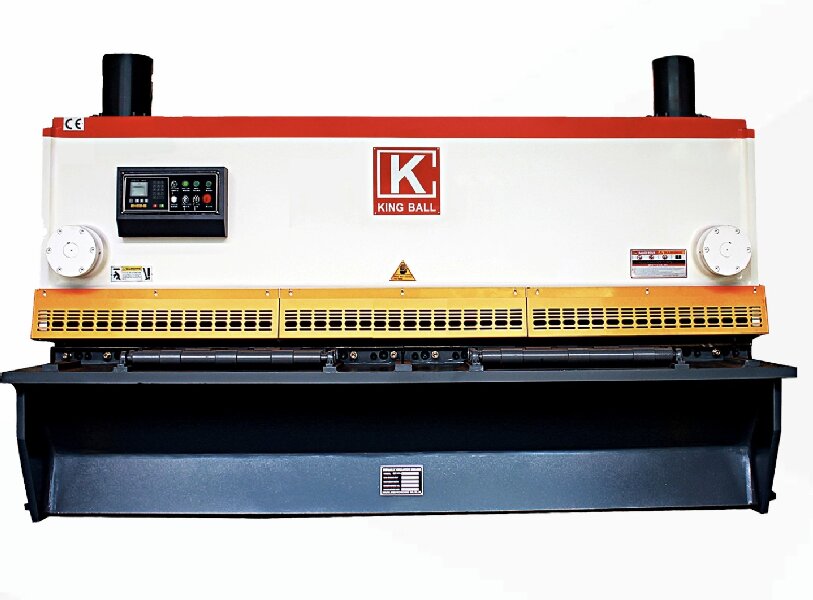
Ever wondered how industries cut massive metal sheets with such clean, precise edges? A shearing machine makes it possible — slicing metal with power and accuracy. It plays a vital role in metal fabrication, from automotive frames to construction panels. In this post, you’ll learn what a shearing machine is, how it works, and why it’s essential in modern manufacturing.
A shearing machine is one of the most essential tools in metal working. It cuts sheet metal, bars, or plates by applying strong shear force between two sharp blades. One blade stays fixed while the other moves down to make a clean, straight cut. The process happens fast, creating precise pieces ready for bending, forming, or welding.
Think of it like a pair of scissors cutting paper — but much stronger. Instead of soft paper fibers, the blades slice through tough metals such as steel or aluminum. In some machines, the action looks more like a punch-and-die system, where one part pushes the metal against another to separate it. Both systems rely on pressure and precision rather than heat or friction.
A good shearing machine doesn’t just cut metal — it ensures dimensional accuracy. The edges remain smooth, square, and free of burrs, reducing the need for extra finishing work. That accuracy is critical when producing parts for vehicles, appliances, or construction panels.
Here’s a quick breakdown of the basic process:
| Step | Action | Result |
|---|---|---|
| 1 | Material placed on the worktable | Aligned for the desired length |
| 2 | Hold-down pins secure the sheet | Prevents slipping during cutting |
| 3 | Upper blade moves downward | Applies shear force |
| 4 | Metal separates cleanly | Produces smooth, precise edges |
Most modern shearing machines use hydraulic or mechanical drives to power this motion. They are fast, reliable, and capable of repeating the same cut hundreds of times without losing accuracy.
Shearing machines are built for speed, precision, and durability. They’re used in almost every metal fabrication shop, and for good reason. Let’s explore what makes them stand out.
A shearing machine doesn’t just cut — it measures. Every stroke produces the same clean, accurate edge, even in high-volume runs. Operators can repeat hundreds of cuts, and the final pieces still match perfectly. This precision makes it ideal for industries like automotive and construction, where tolerances are tight and consistency matters.
No one likes rough or jagged edges. Thanks to sharp blades and stable cutting angles, shearing machines deliver smooth edges that need little or no finishing. It saves time, energy, and post-processing costs. The result? Perfectly straight, ready-to-use parts right off the machine.
These machines don’t play favorites. They can cut steel, aluminum, brass, copper, and other alloys effortlessly. Whether you’re working on soft or hard metals, the shearing process stays efficient and reliable. That flexibility allows manufacturers to use one setup across multiple projects.
| Material Type | Recommended Thickness Range | Typical Use |
|---|---|---|
| Mild Steel | Up to 20 mm | Frames, panels |
| Aluminum | Up to 25 mm | HVAC ducts, enclosures |
| Brass | Up to 10 mm | Decorative components |
| Copper | Up to 8 mm | Electrical fittings |
Different materials behave differently under pressure. That’s why most modern shearing machines allow you to adjust the blade gap and rake angle. A smaller gap gives cleaner cuts on thin sheets, while a larger gap prevents deformation on thicker ones. Adjusting the rake angle also helps control how the blade moves through the metal — less stress, less distortion.
Shearing machines are designed for endurance. Hydraulic and NC models can run continuously while keeping noise and vibration low. They require minimal maintenance — just regular oiling and blade inspection. With fewer moving parts and stable drive systems, downtime is rare, and output stays high.
Quick Fact: A well-maintained hydraulic shear can operate for over 10 years while maintaining over 95% efficiency.
A shearing machine may look simple from the outside, but its operation involves a precise mechanical sequence. Every movement is timed to ensure the metal is cut cleanly, accurately, and safely.
Shearing works through opposing blade motion. The upper blade moves against the lower fixed blade, creating a zone of high shear stress between them. The metal’s internal bonds fail along this line, and separation occurs.
Let’s walk through how a shearing machine performs a cut:
Feeding and aligning the sheet metal
The operator places the metal sheet on the worktable. It’s pushed gently against the back gauge to ensure the correct cutting length.
Clamping material with hold-down pins
Once aligned, a set of hold-down pins presses the metal firmly in place. This prevents slipping or vibration when cutting begins.
Upper blade descends vertically or at an angle
The upper blade moves downward, either straight (guillotine type) or in a swing motion. The lower blade stays fixed on the bed. Together, they apply intense shear force across the sheet.
Material separates cleanly; cut piece is discharged
The metal splits along the blade line. The cut part slides away while the leftover sheet remains clamped for the next cut.
| Step | Machine Action | Purpose |
|---|---|---|
| 1 | Feed and align sheet | Ensure correct size and position |
| 2 | Clamp with hold-downs | Prevent shifting during cut |
| 3 | Shear with upper blade | Apply cutting force |
| 4 | Release and discharge | Deliver smooth, accurate result |
Below is a simplified representation of a typical shearing setup:
     ┌──────────────────────────────┐
     │         Upper Blade          │  ← moves down (hydraulic/mechanical)
     ├──────────────────────────────┤
     │      Metal Sheet (work)      │  ← clamped by hold-down pins
     ├──────────────────────────────┤
     │         Lower Blade          │  ← fixed on the machine bed
     └──────────────────────────────┘
The upper blade slices downward, forcing the metal against the lower blade. The material shears along that line, separating into two parts. Energy from the motor transfers through the crankshaft or hydraulic cylinders, ensuring each cut is quick, uniform, and efficient.
Shearing machines are everywhere in modern manufacturing. They serve as the first step in shaping raw metal into usable forms. Wherever you see metal panels or precise frames, there’s a shearing process behind it.
In fabrication shops, shearing machines are used to cut large metal sheets into smaller, workable sizes. Workers align each sheet, press a button, and within seconds, perfectly sized blanks are ready for welding or bending. It’s fast, clean, and accurate — ideal for batch production or prototyping.
| Operation | Purpose | Result |
|---|---|---|
| Sheet cutting | Prepares material for forming | Accurate, uniform blanks |
| Edge trimming | Removes irregular ends | Smooth, straight edges |
| Sectioning | Splits large stock into smaller pieces | Easier handling and assembly |
From body panels to chassis components, the automotive sector relies heavily on shearing. Manufacturers use both hydraulic and NC shears to cut high-strength steel or aluminum before stamping or pressing. It ensures every car panel fits perfectly, reducing waste and improving vehicle safety.
Every home appliance starts as a sheet of metal — refrigerators, washing machines, ovens, even microwaves. Shearing machines prepare electrical enclosures, covers, and housings by trimming panels to exact dimensions. The clean edges help parts fit tightly, improving both appearance and performance.
In the construction and HVAC industries, shearing machines help create ducts, frames, and architectural panels. Workers cut galvanized steel, stainless steel, or aluminum sheets to precise angles before bending or punching. Accurate cuts reduce air leakage in ducts and ensure structural panels align perfectly on-site.
| Material | Common Product | Typical Thickness |
|---|---|---|
| Galvanized Steel | HVAC ducts | 0.5–1.2 mm |
| Stainless Steel | Building façades | 1–3 mm |
| Aluminum | Ceiling panels | 0.8–2 mm |
In heavy industries like aerospace and shipbuilding, precision is non-negotiable. Shearing machines handle large structural plates and reinforcement components, often made of aluminum or alloy steel. These cuts must be smooth and distortion-free to maintain aerodynamic balance or hull integrity. CNC-controlled shears are preferred here, as they can process oversized sheets while maintaining micrometer-level accuracy.
Not all shearing machines are built the same. Each type is designed for specific materials, cutting thicknesses, and production needs. Let’s look at the main types used in today’s metalworking industries.
A manual shearing machine is the simplest of all. It’s operated by hand through a lever or foot pedal. The motion is mechanical but human-powered, giving workers full control. These machines are perfect for small workshops, art metal projects, or sheet thicknesses under a few millimeters.
They’re low cost, require little maintenance, and are easy to transport. However, their capacity is limited — you won’t see them cutting thick or hard steel plates.
| Feature | Description |
|---|---|
| Operation | Hand or foot lever |
| Capacity | Light-duty, thin sheets |
| Cost | Very low |
| Ideal For | Small-scale fabrication |
The mechanical under crank shear takes manual work to the next level. A rotating flywheel drives an under-crank mechanism beneath the frame. When the clutch engages, energy transfers to the moving blade, delivering fast, uniform cuts. It’s known for its high-speed operation and repeatability — perfect for medium-scale sheet-metal processing. Factories use it for trimming mild steel, aluminum, or brass plates in bulk.
| Advantage | Benefit |
|---|---|
| Fast cutting speed | Higher throughput |
| Simple construction | Easy servicing |
| Under-crank system | Balanced, smooth motion |
The hydraulic guillotine shear is a powerhouse in metal cutting. It uses hydraulic cylinders to move the upper blade vertically, slicing sheets cleanly and with minimal distortion. This motion mimics a real guillotine — steady, controlled, and powerful.
It handles thick or heavy metal sheets effortlessly, making it a go-to choice for industrial production lines. Because of its precision, it’s often used in the automotive, shipbuilding, and steel fabrication sectors.
| Key Feature | Function |
|---|---|
| Hydraulic drive | Smooth, precise motion |
| Vertical cut | Minimal plate distortion |
| Heavy-duty frame | Handles thick materials |
The NC (Numerical Control) swing beam shear adds automation to traditional shearing. Its swinging upper beam moves in a curved path, reducing cutting stress on the material. The NC system allows automatic control of cutting length, blade gap, and stroke count.
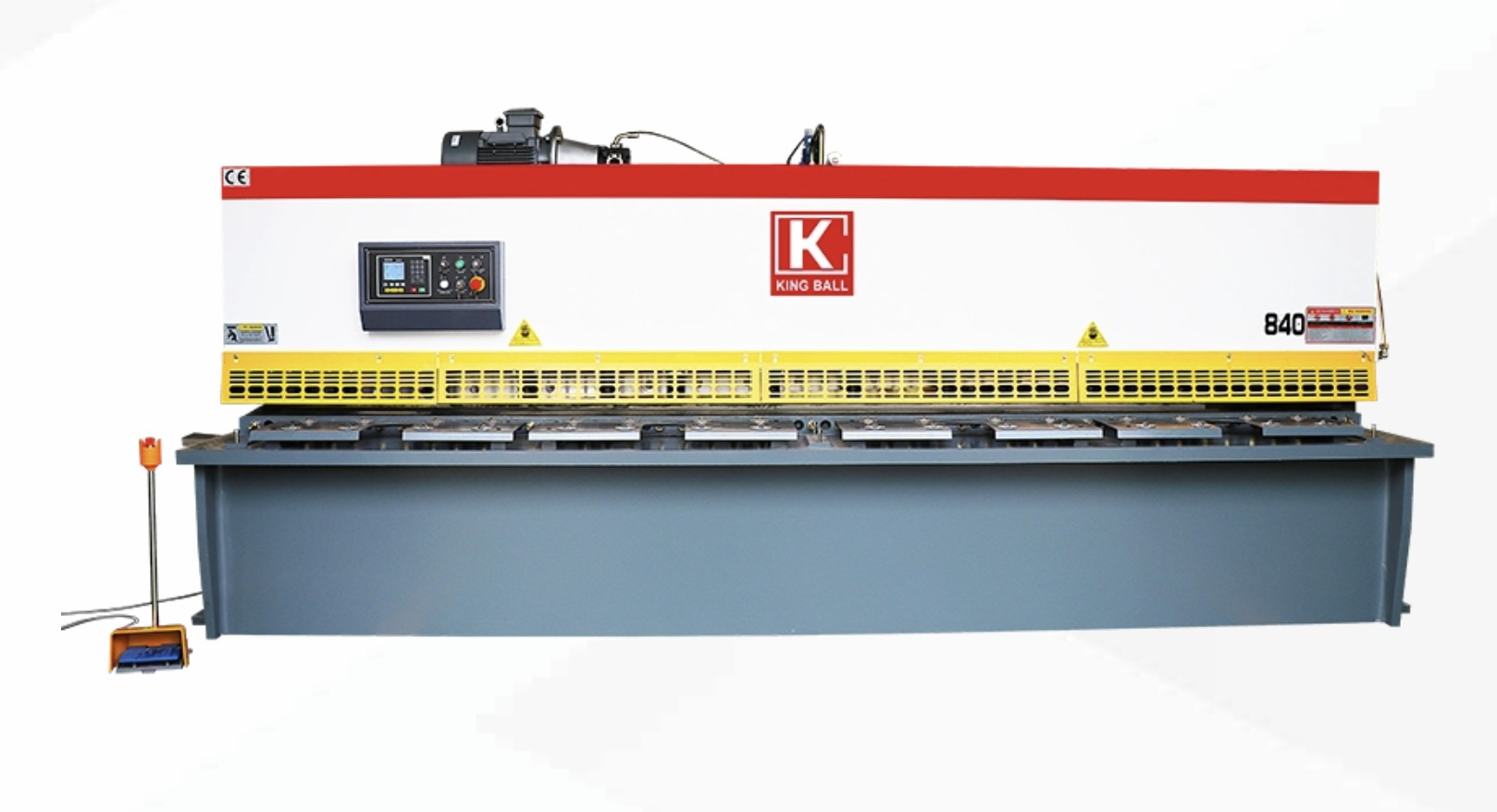
This combination gives high precision, reduced waste, and smoother edges — perfect for modern fabrication lines. Users can store programs, repeat settings, and achieve consistent results even in mass production.
| Feature | Description |
|---|---|
| Swing-beam design | Lower material stress |
| NC control system | Programmable operations |
| Application | Large-scale sheet fabrication |
The pneumatic shear runs on compressed air instead of electricity or hydraulics. It’s lightweight, portable, and convenient for on-site or small-scale work. Operators can move it around easily — ideal for quick jobs, maintenance work, or where electrical supply is limited.
While not meant for heavy-duty applications, it offers impressive control and smooth action for its size.
| Feature | Description |
|---|---|
| Power source | Compressed air |
| Mobility | High, easy to move |
| Cutting capacity | Light-duty sheets |
| Common use | Field fabrication, small workshops |
Selecting the right shearing machine isn’t just about size or speed — it’s about matching the tool to the job. Each setup offers unique advantages depending on what you’re cutting, how often, and the level of precision required.
Before buying or specifying a shearing machine, think through these key factors:
Material type, sheet thickness, and maximum cutting width
Every machine has a cutting capacity limit. Thicker or harder materials require stronger drives and sharper blades. Always check the rated tonnage and width before use.
Desired accuracy and surface finish
If your application demands burr-free edges or tight tolerances, consider hydraulic or NC (numerical control) models. They deliver smoother cuts and less deformation compared to basic mechanical types.
Production volume and automation requirements
For high-volume fabrication, automated feeding and programmable back gauges can save hours of manual setup. NC and CNC-controlled shears excel in repeat production runs.
Power source and maintenance preference (mechanical vs hydraulic)
Mechanical models use flywheels — simple, fast, but less flexible. Hydraulic systems provide better control and smoother motion, but they need periodic oil checks and seals replaced.
| Factor | Mechanical Shear | Hydraulic Shear | NC / CNC Shear |
|---|---|---|---|
| Precision | Moderate | High | Very High |
| Speed | Fast | Moderate | Programmable |
| Maintenance | Low | Medium | Medium |
| Automation | Manual | Semi-auto | Fully automatic |
Each shearing machine type has its own strengths. The choice depends on your production goals and material type.
| Type | Key Advantage | Best For |
|---|---|---|
| Mechanical | Fast cycle speed | Thin sheets, mass production |
| Hydraulic | Precision & power | Thick plates, heavy-duty cutting |
| NC Swing Beam | Automation & accuracy | Modern fabrication lines |
Mechanical shears are fast and rugged — great for simple, repetitive tasks.
Hydraulic shears offer power and precision for thicker sheets or complex workpieces.
NC shears bring digital control to the process, letting operators save settings, automate cuts, and minimize waste.
Each type has its place in the workshop — the key is finding the right balance between speed, accuracy, and efficiency.
The world of metal fabrication is changing fast, and shearing machines are evolving with it. New technologies are making cutting more efficient, accurate, and environmentally friendly than ever before. Here are the most important trends shaping the next generation of shearing systems.
Manufacturers are moving from manual to CNC (Computer Numerical Control) and servo-driven systems. These machines can automatically adjust blade gaps, cutting lengths, and stroke speeds for maximum precision. Servo motors respond instantly to digital commands, allowing smoother acceleration and energy savings. With stored programs and automatic positioning, production becomes faster and less dependent on operator skill.
| Feature | Traditional Shear | CNC / Servo Shear |
|---|---|---|
| Control Type | Manual | Computerized |
| Accuracy | ±0.5 mm | ±0.1 mm |
| Speed Adjustment | Fixed | Programmable |
| Energy Use | High | Low, efficient |
Next-generation shearing machines now include IoT-enabled sensors and real-time diagnostics. These systems track motor temperature, hydraulic pressure, and blade wear. When the machine detects an abnormal vibration or energy spike, it alerts operators before breakdowns occur. This predictive maintenance minimizes downtime and extends equipment life. In smart factories, such data is integrated into centralized dashboards, giving engineers full visibility over performance trends.
Energy costs are pushing manufacturers to adopt eco-hydraulic systems that recycle oil flow and reduce heat generation. Modern pumps only activate when pressure is needed, cutting idle energy consumption by up to 40%. Some models even use bio-based hydraulic fluids for reduced environmental impact. Combined with electric drives, these features help plants meet sustainability targets without sacrificing power.
The latest designs combine shearing, punching, and bending into one integrated machine. These multi-process systems streamline workflow — instead of moving sheets between separate tools, operators can finish parts in a single setup. They save space, reduce handling errors, and support just-in-time production lines. For advanced users, hybrid machines with modular attachments can switch between shearing and forming tasks in minutes, boosting flexibility across industries.
A: A metal shearing machine cuts sheet metal, bars, or plates using two blades — one fixed and one moving. The upper blade descends vertically or at an angle to slice the metal cleanly under shear force.
A: Common types include manual, mechanical under crank, hydraulic guillotine, NC swing beam, and pneumatic shearing machines. Each type suits different material thicknesses and production needs.
A: Prices vary widely — from a few thousand dollars for manual or mechanical models to over $50,000 for large CNC or hydraulic systems.
A: Hydraulic shears use pressurized cylinders for smoother, more precise cutting, ideal for thick sheets. Mechanical shears rely on flywheels and crank mechanisms, offering faster but less flexible operation.
A: Consider your material type, thickness, desired accuracy, production volume, and automation level. Hydraulic and NC models suit precision and high-volume work.
A: Always secure materials with hold-down pins, keep hands clear of blades, use guards, and perform regular maintenance checks before cutting.
A: They’re widely used in automotive, construction, HVAC, appliance, aerospace, and general metal fabrication industries for cutting and shaping sheet metal.
In conclusion, shearing machines play a vital role in modern metal fabrication. They combine efficiency, precision, and versatility to cut materials quickly and cleanly. From small workshops to large factories, they streamline production and improve quality. Before choosing a model, evaluate your material type, thickness, and accuracy needs to ensure the best performance.
Kingball is a true expert of machine- manufacturing based on more than 20 years experience. We have 30, 000 square meters workshop, advanced production equipment, 220 experienced staff, and strictly effective quality assurance system. Nowadays our company is developing the global market, We are currently looking for all agents and powerful cooperation globally to sell our products worldwide.
Looking for the right shearing solution? Explore our full product range or request a custom quote today.


